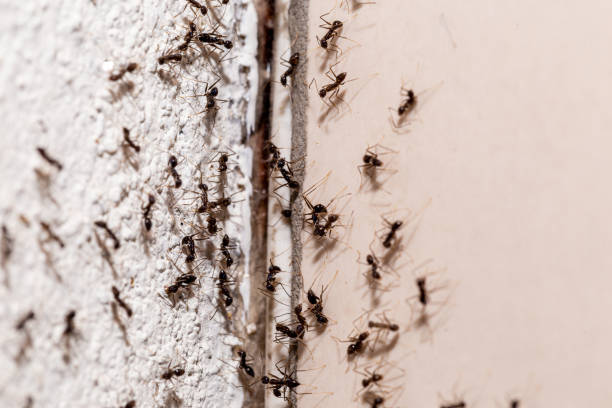
Ant infestations are a common household problem that can range from minor inconveniences to significant disruptions. Understanding the basics of ant behavior, their attraction to homes, and effective ways to eliminate them can help you protect your home from these pests.
Why Do Ants Invade Homes?
Ants are social insects that live in colonies and work together to meet their survival needs.
- Residual crumbs or spills on countertops, floors, or hidden areas.
- Sweet foods like sugar, syrups, fruits, or baked goods.
- Protein-based foods such as meat scraps or pet food.
- Leaky pipes under sinks or appliances.
- Standing water in bathrooms or kitchens.
- Warm areas with easy access to food and water.
- Entry points such as cracks in walls, windowsills, or door frames.
Common Signs of an Ant Infestation
Identifying an infestation early is critical for effective control.
- Trail of ants:A visible line leading between a food source and the nest.
- Discarded wings:Winged ants (known as swarmers) may leave behind wings near windowsills or entry points.
- Piles of dirt:Certain species like carpenter ants can create piles of sawdust-like material near wooden structures they damage.
Steps to Address an Ant Infestation
- Keep all food sealed in airtight containers.
- Clean up spills immediately and maintain general kitchen hygiene.
- Seal cracks, crevices, and other potential entry points around your home.
- Non-Toxic Remedies Use natural deterrents that repel ants without harmful chemicals:
- Vinegar spray: Mix equal parts vinegar and water; spray along ant trails.
- Lemon juice: Wipe down surfaces with lemon juice to disrupt scent trails.
- Chemical Treatments (When Necessary)
If natural remedies prove insufficient: - Apply bait traps: These allow worker ants to carry poison back to the colony.
- Use residual sprays around baseboards or entry points for long-term protection.
- Targeting the Nest Locating and treating the nest ensures complete removal of the colony:
- Follow ant trails to locate nesting sites indoors or outdoors.
- Pour boiling water directly into outdoor nests if applicable.
| Method | Effectiveness | Safety Level | Best For |
| Vinegar Spray | Moderate | High (Non-Toxic) | Small infestations & natural solutions |
| Bait Traps | High | Moderate | Addressing entire colonies |
| Residual Sprays | High | Low (Toxic) | Persistent infestations |
Long-Term Maintenance
After eliminating an infestation, take steps to prevent future occurrences: – Regularly inspect your home for signs of new activity. – Store trash bins tightly sealed both indoors and outdoors. – Monitor high-risk areas such as kitchens and basements regularly.
Effectively managing ant infestations starts with understanding why they occur and implementing proactive solutions tailored for your environment. Persistent efforts will help maintain a pest-free space over time without unnecessary chemicals or disruption.
Key Factors That Influence the Cost of Exterminators in Florida for Ant Pest Control Services
When dealing with an ant infestation, cost is often a significant factor in deciding how to address the issue. The expense of professional pest control services can vary widely, depending on several key factors. Understanding these elements can help you make informed decisions about managing your ant problem effectively and within budget.
Key Factors Influencing the Cost of Ant Pest Control
- Different ant species require specific treatment methods.
- For example:
| Ant Species | Typical Treatment Methods | Cost Implication |
|————————|—————————————————-|——————————–|
| Carpenter Ants | Use of bait traps, sprays, and wood treatment | Can be higher due to targeted efforts in affected wood structures. | | Fire Ants | Chemical treatments, mound management | Moderate as it may involve outdoor treatments over larger areas. | | Common House Ants | Baits, insecticide sprays | Typically lower costs as general options are effective. - A small infestation may only require minimal treatment or DIY solutions, whereas a large-scale invasion can demand multiple sessions and advanced techniques.
- Heavily infested areas may incur higher costs for labor and materials due to repeated applications.
- Larger properties increase the amount of area needing inspection and treatment.
- Complex property layouts (e. g. , multiple floors or outdoor spaces) may require additional work to ensure all hiding spots are treated.
- Some infestations need only one-time extermination services.
- Recurring issues might require monthly or quarterly visits, increasing the overall cost.
- Urban areas may have higher service rates due to increased demand for pest control professionals.
- Hard-to-reach infestation sites (e. g. , inside walls or basements) might add labor costs for specialized equipment or extended work hours.
- Natural or eco-friendly solutions often cost more than conventional chemical treatments.
- Heat treatments or specialized equipment such as fumigation tents can also elevate expenses.
- Highly experienced pest control companies may charge premium fees but often provide more reliable results.
- Local providers could offer lower pricing but might lack access to advanced tools or long-term guarantees.
What Homeowners Should Consider
- Budget vs Effectiveness:Is a less expensive DIY solution viable for your situation, or is professional expertise essential?
- Guarantees:Look for companies offering warranties on their work—this ensures long-term effectiveness without additional charges if problems persist within a specified timeframe.
- Safety Concerns:If you have pets, children, or environmental sensitivities, prioritize pest control methods that minimize toxicity risks.
- Reputation:Research reviews and testimonials to ensure you hire credible providers with proven success rates.
Ways To Save on Costs
- Choose bundled services that address multiple pests if your property has broader concerns like termites or rodents alongside ants.
- Perform regular maintenance—clean food sources, seal cracks in walls—to prevent recurring infestations requiring professional help.
- Request quotes from at least three different companies to compare pricing structures thoroughly before making a decision.
By understanding these factors and considerations ahead of time, homeowners can make smarter choices that balance cost with effective pest management strategies for ant infestations.
Effective Pest Removal Services in Florida: DIY Ant Traps and Natural Home Remedies
Ant infestations can be a persistent problem in many households, but not every situation requires professional pest control or chemical solutions. For those seeking natural and budget-friendly ways to manage ant issues, DIY traps and home remedies can provide effective results. Below are some proven strategies to address ant problems using readily available materials.
https://westpalmbeachpestcontrolfl.weebly.com/
Understanding Ant Behavior for Effective DIY Solutions
Before implementing any remedies, it’s crucial to understand how ants behave:
– Ant trails: Ants leave a pheromone trail to guide others to food sources. Breaking this trail is critical for long-term success.
– Food preferences: Different species may be attracted to sweets, proteins, or grease. Tailor your bait accordingly.
Popular DIY Ant Traps
Creating your own ant traps is an efficient way to target ants while keeping harmful chemicals out of your home.
- Ingredients: 1/2 cup sugar, 1 tablespoon borax, 1/2 cup warm water.
- Mix the ingredients until dissolved. Soak cotton balls in the mixture and place them near ant trails. The sugar attracts the ants while borax disrupts their digestive system, killing them gradually.
- Ingredients: 1 tablespoon peanut butter, 1/4 teaspoon boric acid (or borax).
- Combine ingredients into a paste-like texture. Place small amounts on pieces of cardboard near entry points or nests.
- Ingredients: Equal parts honey and white vinegar with a small amount of liquid dish soap added (optional).
- Pour the solution into shallow dishes or lids near infested areas; it attracts ants but prevents escape.
| Trap Type | Key Ingredient | Best For | Notes |
| Sugar & Borax | Sugar | Sweet-loving ants | Keep away from pets/children |
| Peanut Butter & Boric Acid | Peanut butter | Protein-loving ants | Use sparingly due to toxicity |
| Honey Vinegar | Honey | General-purpose | Effective for multiple species |
Home Remedies Without Traps
- Vinegar Spray: Mix equal parts vinegar and water in a spray bottle and apply directly along windowsills, doorways, and existing trails.
- Lemon Juice: The acidity disrupts ant pheromone trails; squeeze lemon juice around entry points.
- Cinnamon Powder: Sprinkle cinnamon near cracks or crevices as a deterrent.
- Diatomaceous Earth (Food Grade): Spread around infested areas; it dehydrates and kills ants on contact while remaining safe for humans and pets.
- Chalk Lines: Draw chalk lines where ants are entering; they avoid crossing calcium carbonate in chalk.
Tips for Long-Term Prevention
While traps and remedies work well for immediate issues, prevention is key: – Seal cracks around windows, doors, and foundations with caulk. – Store food in airtight containers. – Wipe surfaces regularly with soapy water to remove crumbs and residues. – Fix leaks since moisture attracts certain species like carpenter ants.
By combining these practical tips with effective homemade solutions, you can handle minor ant infestations naturally without resorting to harsh chemicals or costly interventions.

Effective Florida Pest Control Service: Fire Ants vs Regular Ants Solutions That Work
Ant infestations can become a significant issue if not addressed properly, especially when dealing with fire ants and regular ants. While both types of ants can invade homes, yards, and other properties, their behavior, nesting habits, and level of threat differ significantly. This guide explores the differences between fire ants and regular ants and outlines proven methods to effectively control each type.
Understanding the Differences Between Fire Ants and Regular Ants
- Reddish-brown in color.
- Known for their aggressive behavior when disturbed.
- Deliver painful stings that can cause allergic reactions in some individuals.
- Build large mounds in open areas such as yards or fields.
- Range in color from black to brown.
- Less aggressive compared to fire ants; they rarely bite or sting humans.
- Typically forage for food indoors or outdoors without building extensive mounds.
- More likely to invade kitchens and pantries in search of sugary or greasy foods.
| Feature | Fire Ants | Regular Ants |
| Color | Reddish-brown | Black, brown, or dark yellow |
| Behavior | Aggressive | Passive |
| Nesting Sites | Large outdoor mounds | Indoors/outdoors near food |
| Threat Level | Painful stings | Minimal (nuisance only) |
Proven Control Methods for Fire Ants
- Broadcast Baiting: This involves spreading a slow-acting bait around the infestation area. Worker ants carry the bait back to their colony, ultimately eliminating the queen.
- Individual Mound Treatments: Use insecticides labeled specifically for fire ants to treat visible mounds directly.
- Broadcast bait across the infected area.
- Treat specific mounds to prevent re-colonization.
- Boiling Water Treatment (for small areas): Pouring boiling water into the mound can kill fire ant colonies; however, this approach may require multiple applications.
Proven Control Methods for Regular Ants
- Inspect doors, windowsills, pipes, and cracks where ants might enter.
- Use caulk or weather stripping to seal gaps.
- Sprinkle diatomaceous earth near entry points.
- Use vinegar sprays as an organic deterrent around common trails.
- Place non-toxic bait stations near high traffic areas such as kitchens or pantries.
- Ensure baits contain attractants like sugar combined with slow-acting poison such as borax.
- Clean up spills immediately and store food in airtight containers.
- Take out trash regularly since leftover food waste attracts most species of regular ants.
When Professional Help Is Necessary
For severe infestations of either type of ant—especially in cases where DIY solutions are ineffective—it is advisable to consult pest control professionals who use advanced techniques like: – Non-repellent insecticides that target colonies at their source. – Specialized treatments designed for long-term prevention.
Understanding these strategies ensures efficient management tailored to either fire ant or regular ant issues while reducing future occurrences effectively.
Choosing the Best Pest Control Company for Effective Ant Management
Choosing the right professional ant control service can save time, money, and stress by ensuring that the ant infestation in your home or business is addressed effectively. With so many pest control providers available, knowing what factors to prioritize can help you make an informed decision. Below are key considerations to keep in mind when selecting a professional ant control service.
Ensuring Credibility and Certification in Pest Removal
- Verify that the company is licensed to operate in your state or region.
- Check if their technicians are certified pest management professionals (PMPs).
- Look for companies affiliated with reputable organizations, such as the National Pest Management Association (NPMA).
- Seek recommendations from friends, family, or online reviews.
- Ensure that the company specializes in handling ant infestations specifically.
- Ask how long they have been in business and their experience with similar cases.
Evaluating Methods Used
- Eco-Friendly Solutions: Many companies now offer environmentally safe approaches that limit exposure to harmful chemicals.
- Integrated Pest Management (IPM): This strategy combines multiple techniques such as baiting, sealing entry points, and monitoring rather than relying solely on pesticides.
- Targeted Treatments: Inquire whether treatments are specific to the type of ants infesting your property (e. g. , carpenter ants vs fire ants).
| Type of Service | Features | Best For |
| Basic Chemical Treatment | Traditional pesticide use | Fast eradication but less eco-friendly |
| Eco-Friendly Treatment | Natural/organic solutions | Families with children & pets concerned about toxicity |
| Comprehensive IPM Plan | Combination of methods including prevention & monitoring | Long-term solutions & sustainable practices |
Requesting a Detailed Inspection and Quote
- A reliable company will perform a thorough examination of areas where ants are most active.
- They should identify not only visible infestations but also hidden colonies.
- Obtain a detailed estimate outlining all charges upfront.
- Be wary of companies offering unusually low prices; these may cut corners or provide subpar services.
- Request strategies tailored to your specific infestation problem rather than one-size-fits-all solutions.
Ensuring Post-Treatment Support
- Regular inspections post-treatment ensure that ants do not return.
- Some companies offer warranties or guarantees where additional treatments come at no extra cost if required within a fixed period.
- Guidance on preventive actions you can take between visits will help maintain results.
Questions to Ask Before Hiring
- What type of chemicals or products will you use? Are they safe for children and pets?
- How long will it take to resolve the infestation? Will multiple visits be required?
- What steps will be taken to prevent future infestations?
- Do you offer any warranties or guarantees on services provided?
By thoroughly researching and comparing options based on these criteria, you can confidently select an ant control service provider equipped to meet your needs effectively while prioritizing safety and sustainability.
Carpenter Ant Identification and Control: A Comprehensive Guide
Identifying and effectively controlling carpenter ant infestations is crucial to protecting your property.
Identifying Carpenter Ants
Proper identification is the first step in addressing a potential infestation.
- Size: Carpenter ants are larger compared to most ant species, ranging between 6 to 12 millimeters in length.
- Color: They are typically black but can also appear reddish-brown depending on the specific species.
- Body Structure: Look for a distinct narrow waist and bent antennae, which distinguish them from other insects like termites.
- Wings (in reproductive ants): Winged carpenter ants can be confused with termites during their swarming season; however, their wings differ in size (front wings are longer than back wings) and lack the equal-length characteristic of termite wings.
- Telltale Signs: Presence of wood shavings or frass near wooden structures, faint rustling noises inside walls, or visible galleries within wooden components can all indicate carpenter ant activity.
Common Areas to Inspect
Carpenter ants prefer moist or decaying wood for nesting purposes.
- Wooden siding or window frames exposed to excess moisture
- Crawl spaces with poor ventilation
- Roof eaves and gutters clogged with debris
- Landscaping features such as tree stumps or wooden fences near your home
Methods for Controlling Carpenter Ants
Once identified, control measures must be implemented promptly to minimize damage and eradicate the infestation effectively.
1. Eliminate Moisture Sources
- Repair leaks in plumbing or roofing that contribute to damp conditions.
- Use dehumidifiers in areas prone to high humidity (e. g. , basements).
- Improve ventilation around attics, crawl spaces, or other enclosed areas.
2. Remove Attractants & Repair Damaged Wood
- Seal cracks around doors and windows that serve as entry points.
- Trim branches or vegetation touching exterior walls that provide access routes.
- Replace decayed wood components immediately to prevent nesting opportunities.
3. Use Effective Baits & Insecticides
| Type of Treatment | Description |
| Baiting Systems | Use bait stations containing slow-acting toxins that allow worker ants to bring poison back to colonies for distribution among nestmates, including queens. |
| Residual Insecticides | Apply non-repellent sprays along suspected trails/entry points ensuring long-term protection against reinfestation. |
| Dust Treatments | Inject pesticide dust into wall voids where carpenter ants have built nests. |
It is essential only licensed products designed specifically for indoor/outdoor pest control use should apply here.

What Kills Ants Instantly?
When dealing with ant infestations, immediate elimination is often a priority. There are several options available for killing ants instantly, ranging from chemical solutions to natural remedies. Each method has its advantages and drawbacks, so understanding the best choices can help you address an infestation quickly and efficiently.
Chemical Solutions
Chemical ant killers are highly effective for instant results. These products are specifically designed to eliminate ants on contact or within minutes.
- Active Ingredients: Pyrethroids or other synthetic compounds
- Pros: Quick action, kills ants on contact
- Cons: Can be harmful to pets, children, or the environment when misused
- Example Products: Raid Ant & Roach Spray, Ortho Home Defense
- Active Ingredients: Hydramethylnon or Fipronil
- Mode of Action: Lures ants to consume poison that works within hours
- Ideal For: Dealing with colonies while providing visible immediate effects on individual ants
| Chemical Solution | Speed | Safety Concerns | Coverage Area | Price Range |
| Raid Ant Spray | Instant | Toxic if inhaled/ingested | Small areas (local use) | $5-$10 |
| Ortho Home Defense Bait Stations | <24 hours | Moderate risk if tampered with by pets/kids (Use responsibly) | Indoor/outdoor use nearby trails. | Approx–> |
- Effective Tips from a Pest Control Company on Identifying Bugs in Your Home
- Essential Knowledge Every New Pest Control Technician in Exterminators in Florida Must Have
- Florida Pest Control: Understanding the Basics of Ant Infestations and How to Address Them
- Your Ultimate Guide to Choosing a Safe and Effective Pest Control Company for Cockroach Problems
- Comprehensive Guide to Florida Pest Control Costs and Factors Affecting Pricing
- Finding the Right Pest Control Company to Protect Your Home